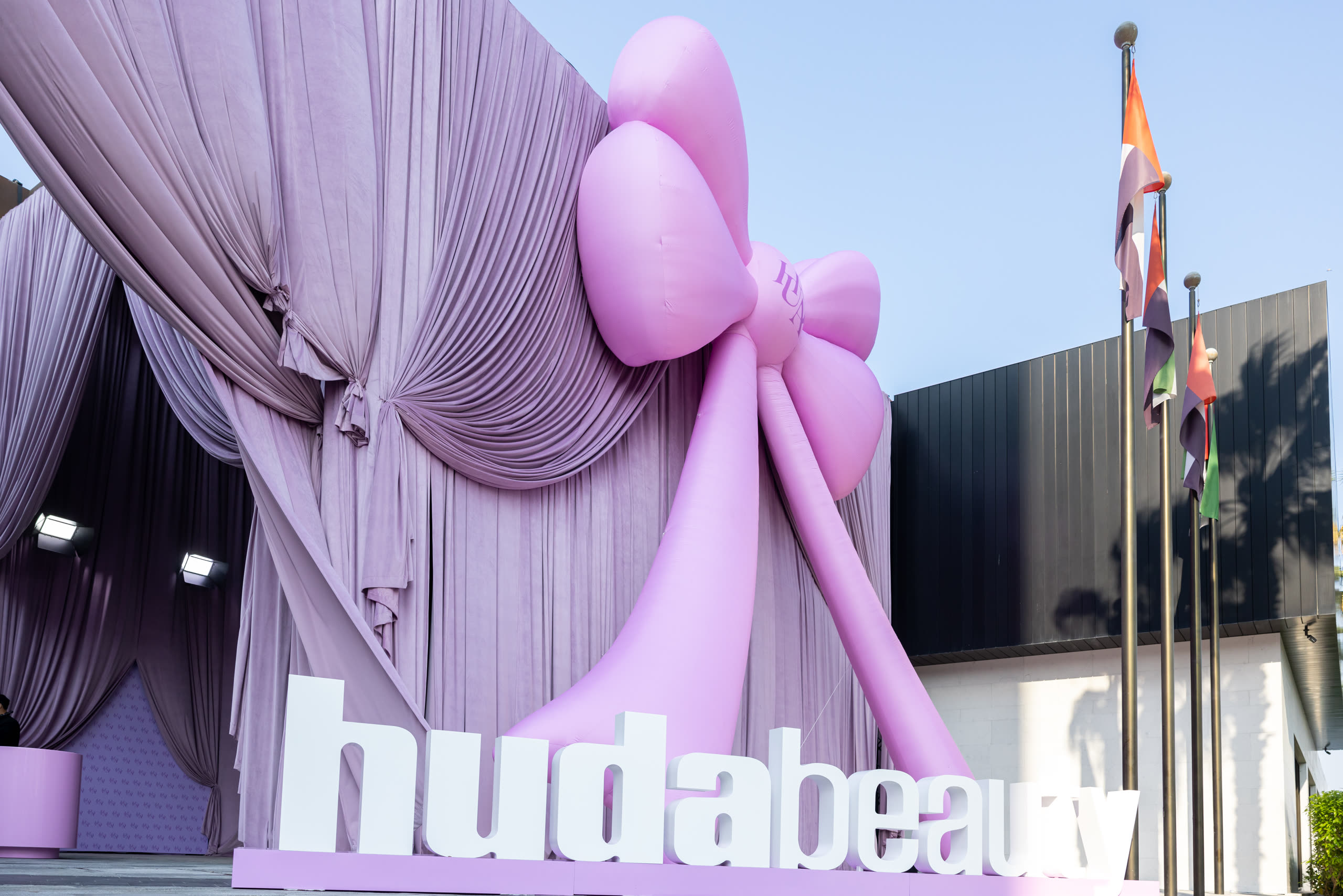
Some briefs ask for a backdrop; this one asked for a landmark. For Huda Beauty, Dune Studios wrapped a Dubai venue in floor-to-rooftop lilac drapery and crowned it with a roughly seven-metre inflatable bow in pastel pink Oxford fabric — turning the entire facade into an oversized gift box for the brand.
The piece was developed from concept and 3D design through to production supervision, in collaboration with Bureau Béatrice, who fabricated the bow. It anchored the event entrance, framed by the brand's logotype in dimensional letters.
The bow reads as effortless — that is the engineering talking. A seven-metre inflatable in Dubai’s heat needs internal pressure management, wind-load calculations for a rooftop edge, and fabric that holds a pastel tone under hard sun. Our 3D model was the fabrication drawing: every seam and anchor point was placed in the render before Bureau Béatrice cut a panel.
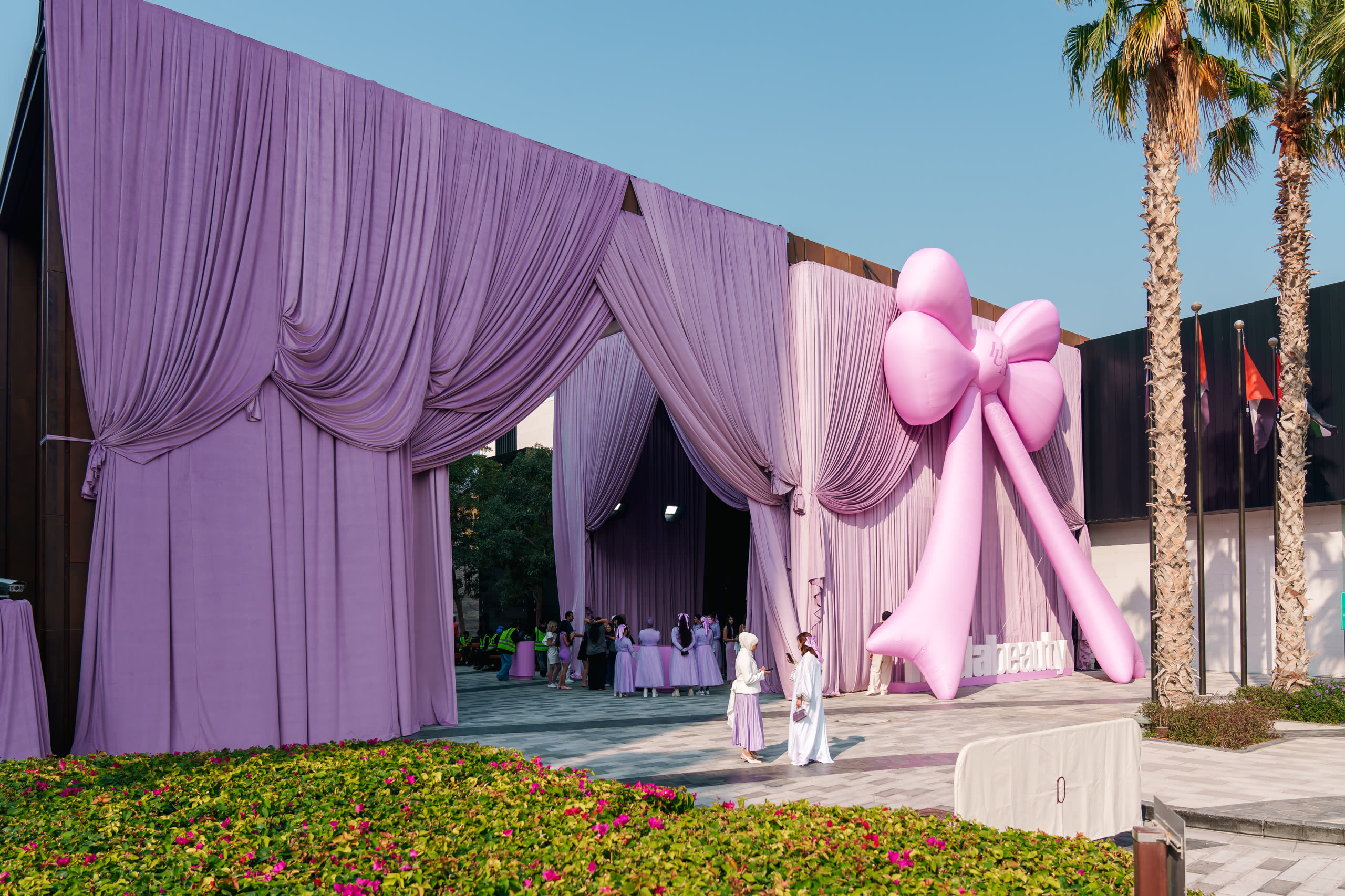
Designed for the camera first
A takeover like this succeeds or fails in the photograph, not the floor plan. Every decision — the bow's diameter, the drape's pleat rhythm, the letter height — was checked in render against the sightlines guests would actually shoot from: the driveway approach, the entrance queue, the three-metre selfie distance.
That is the core of how we approach brand activations: the physical object and its social-media afterlife are one design problem.
We also planned the teardown as carefully as the build. Event architecture lives for days and is judged for years — the photography had to be flawless because the object was never meant to be permanent.
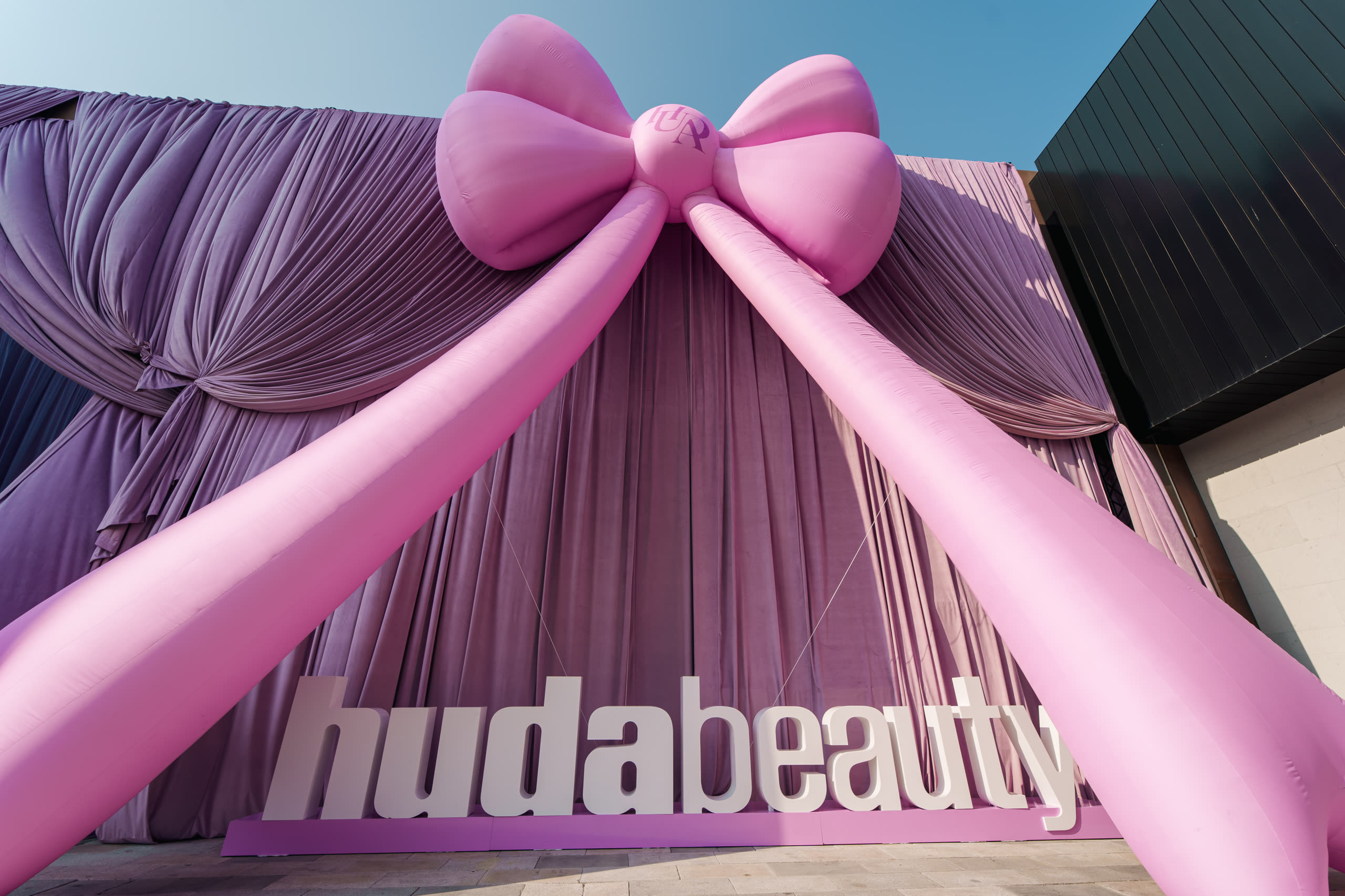
From real inflatables to fake ones
The same thinking drives our CGI campaign work — what the industry now calls FOOH. If a seven-metre bow can stop traffic in the physical world, a seventy-metre one can do it online. Our CGI & FOOH campaigns apply the same photographability test to imaginary objects at impossible scales.
More images and the full story are on the Huda Beauty project page.
Huda Beauty’s audience made the rest happen: the bow became the most photographed point of the event within hours, which is precisely the metric a takeover like this is designed for.
For brands considering a similar takeover: the facade is the invitation, and it sets the budget of attention for everything inside. We now prototype every event entrance as a photographed object first and a built object second — the order matters.
It also proved something we now treat as a rule: in event design, the silhouette is the brand asset — if it reads in a thumbnail, it works.