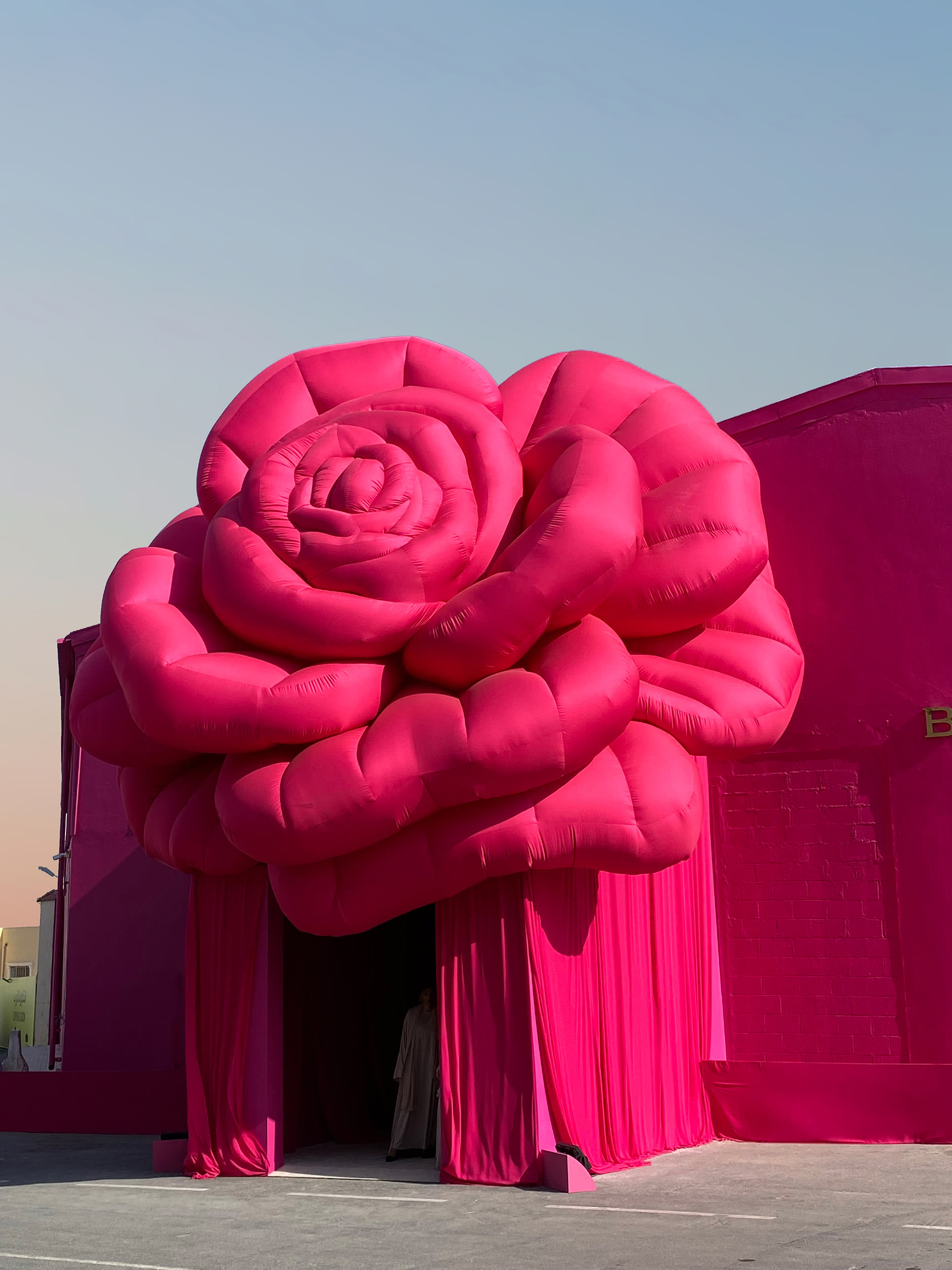
For the launch of Bulgari's Le Gemme Sahare — a perfume built around the Taif rose — Dune Studios created a campaign that lives in two worlds at once: a fully digital film-and-image world of rose seas and desert dunes, and a physical installation where that same world became a room you could enter.
It is the clearest expression of how we approach pop-up and installation design: the digital and the physical are not two deliverables but one concept, art-directed once and expressed twice.
The Taif rose gave us the narrative spine: an ingredient born in the desert, elevated into high perfumery. The dunes in our films are not decorative — they are the ingredient’s biography, rendered at the scale of a dream.
Digital first — but built to materialize
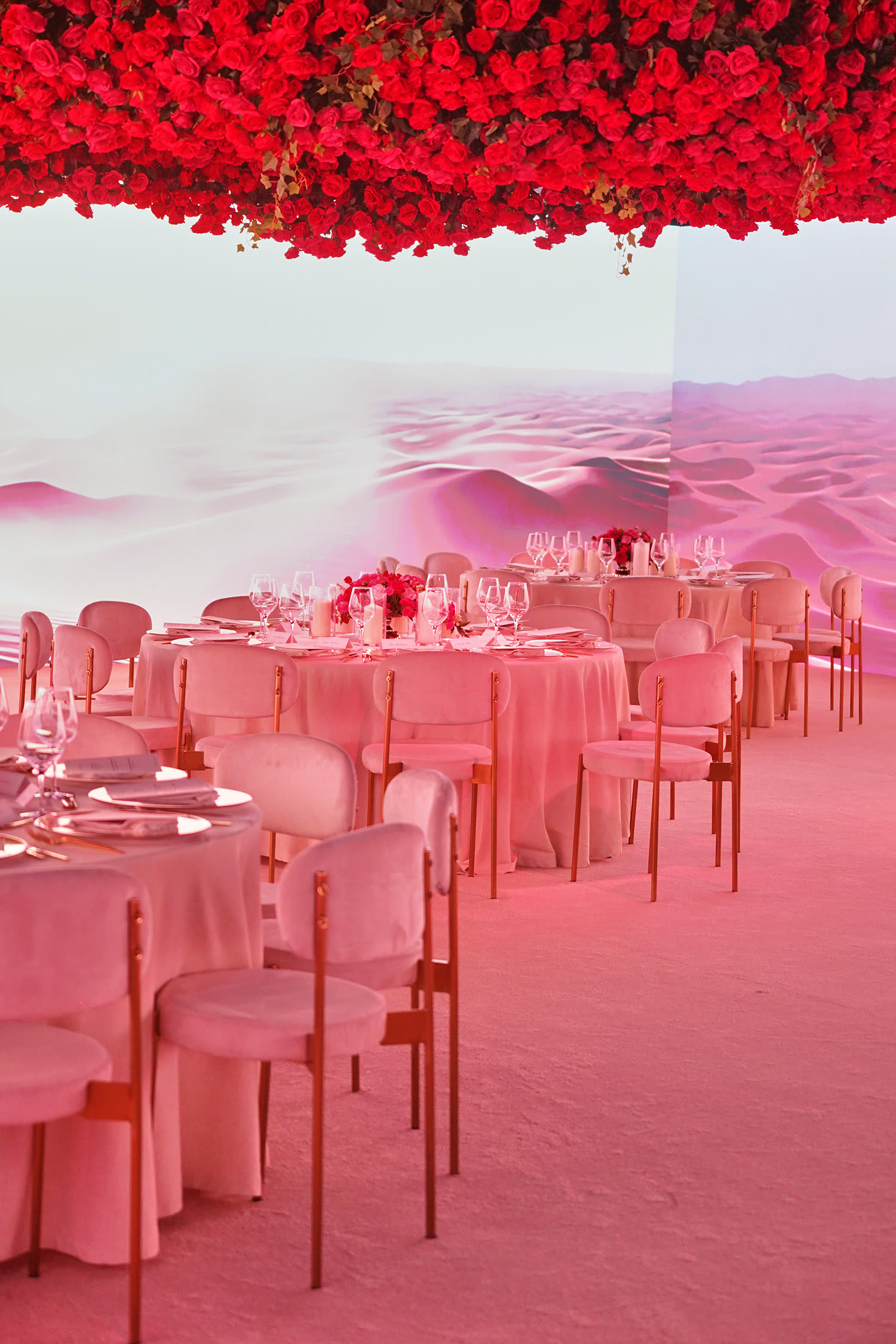
The CGI campaign — a sea of red roses dissolving into pink dunes, developed under the creative direction of Victor Nouman — was art-directed from day one with the installation in mind. Materials, light and scale in the renders were chosen so they could be rebuilt physically without reinterpretation.
When visitors later walked into the installation, the recognition was instant: the same dunes, the same rose ceiling, the same light. That continuity is what turns a launch into a world.
Physically, the installation demanded the same discipline as the render. The rose ceiling was engineered as a suspended field of individually fixed stems; the dune tablescape was sculpted to the exact contours of its CGI counterpart. Visitors who had seen the campaign online experienced a strange déjà vu — the room was the render.
A language we keep returning to
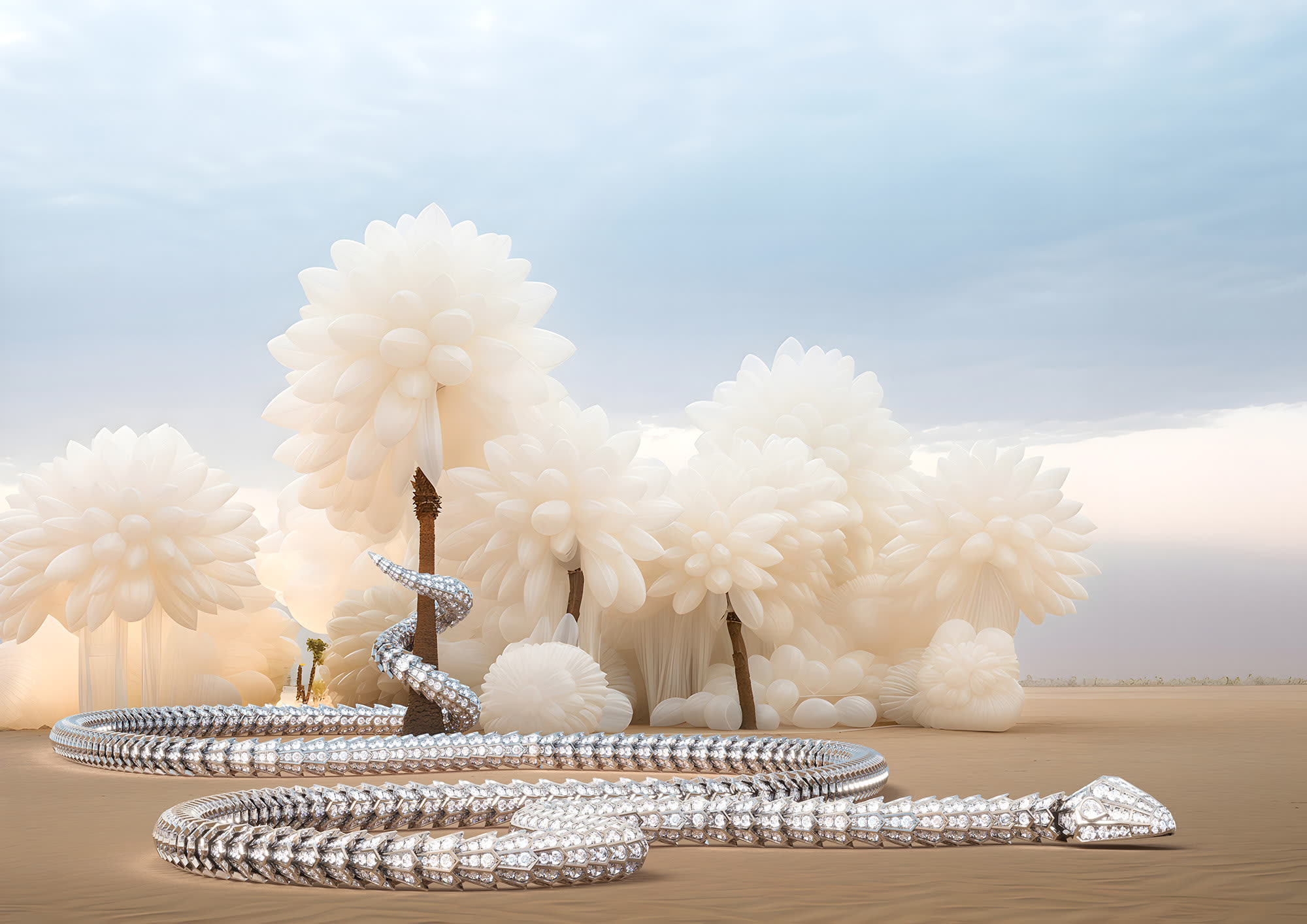
Sahare sits in a family of Bulgari collaborations: see also Serpenti’s Odyssey, our utopic image series for the Serpenti 75th anniversary, which imagined the icon travelling from Rome to the Middle East through imagined landscapes.
The full case study — films, imagery and installation photography — lives on the Le Gemme Sahare project page.
This is the measurable value of designing both media at once: the campaign drove the audience to the space, and the space gave the campaign its photographs. Bulgari Middle East received one coherent world instead of two subcontracted halves.
There is a lesson here for any luxury launch in the region: Middle Eastern audiences respond to spectacle that is rooted in place. A perfume story told through Taif roses and dunes could only have been made here — and that is exactly why it travelled.
For us, it remains the reference project for digital-to-physical thinking — the one we show when a client asks what that phrase actually means in practice.