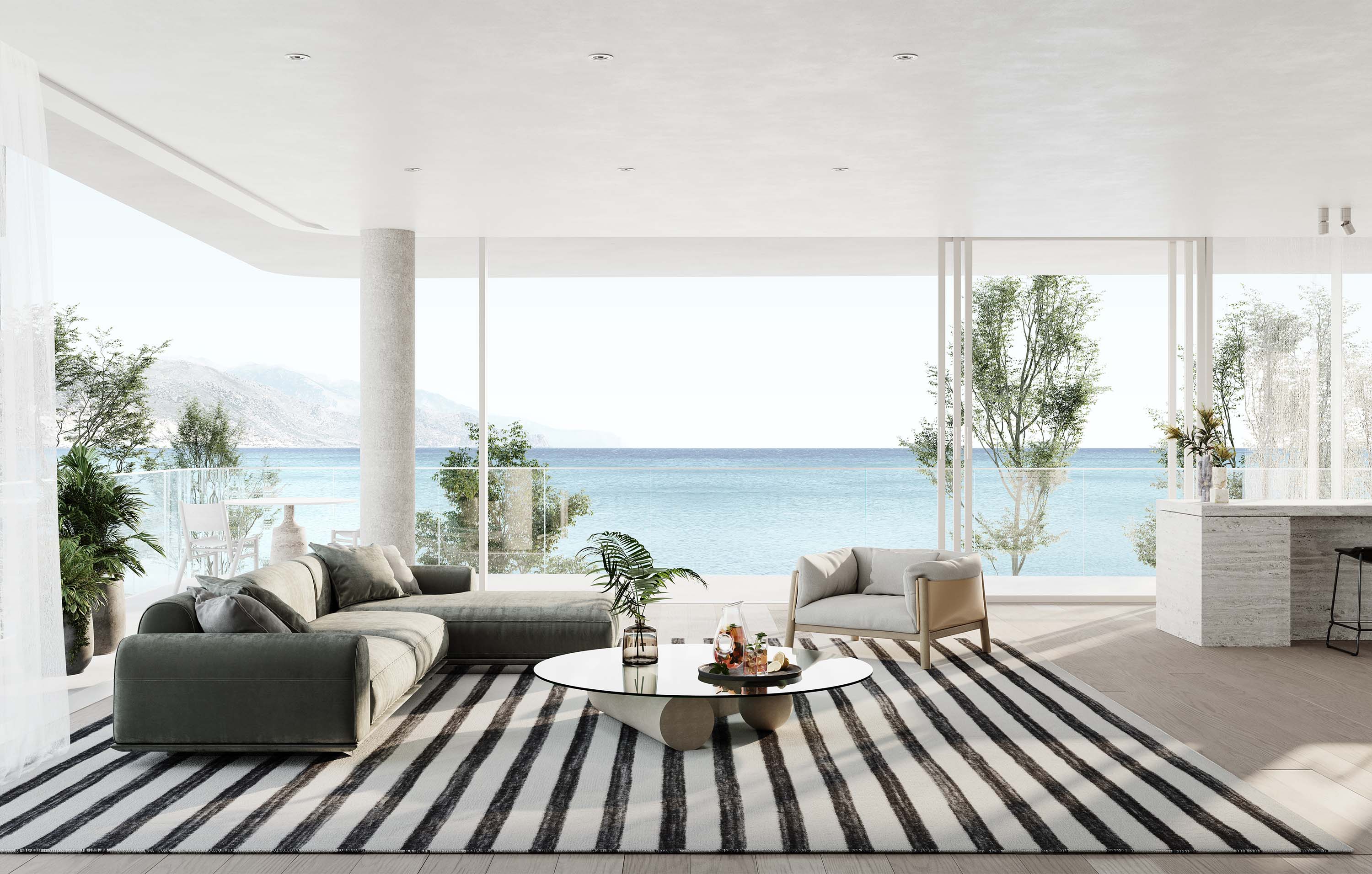
Most CGI studios come from animation; most spatial designers come from fit-out. Dune Studios was founded by architects who make images — and that single fact explains our catalogue better than any positioning statement: the same discipline that lights a render correctly is the one that makes a room feel inevitable.
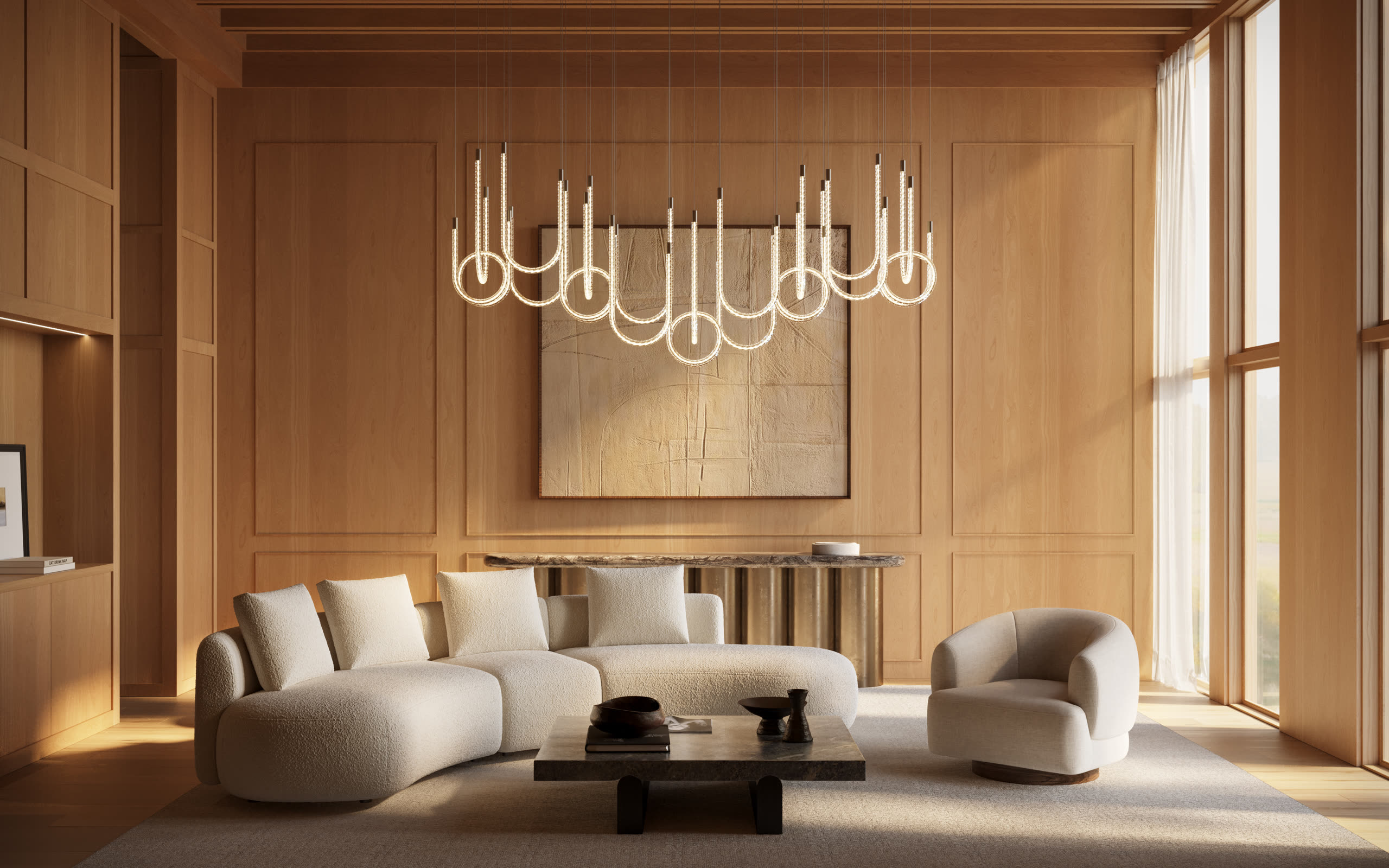
It is why our portfolio runs from pure CGI — chandeliers staged in situ for Saint-Louis, campaign interiors for Stark Carpets — to built work, and why clients use one studio for both. The same goes for our exhibitions, temporary events and pop-ups: every one starts as a design concept an architect could build.
The crossover is also practical: our CGI files are built with real millimetre dimensions, so a render can become a shop drawing without remodeling. When the Saint-Louis interiors needed to feel inhabited, it was architectural detailing — skirting depths, panel joints, ceiling heights — that made the crystal believable.
One eye, two media
When we design a physical space, it is conceived in CGI from day one — which means the marketing imagery is born inside the design process, not commissioned after it. When we design a campaign, it is staged with architectural light and real dimensions — which is why it holds up next to photography. Each side of the practice makes the other cheaper and better.
Projects like Reversed Universe for SKP Chengdu — where architecture and digital media fuse into an immersive film — sit exactly on that seam, as does our immersive experience work.
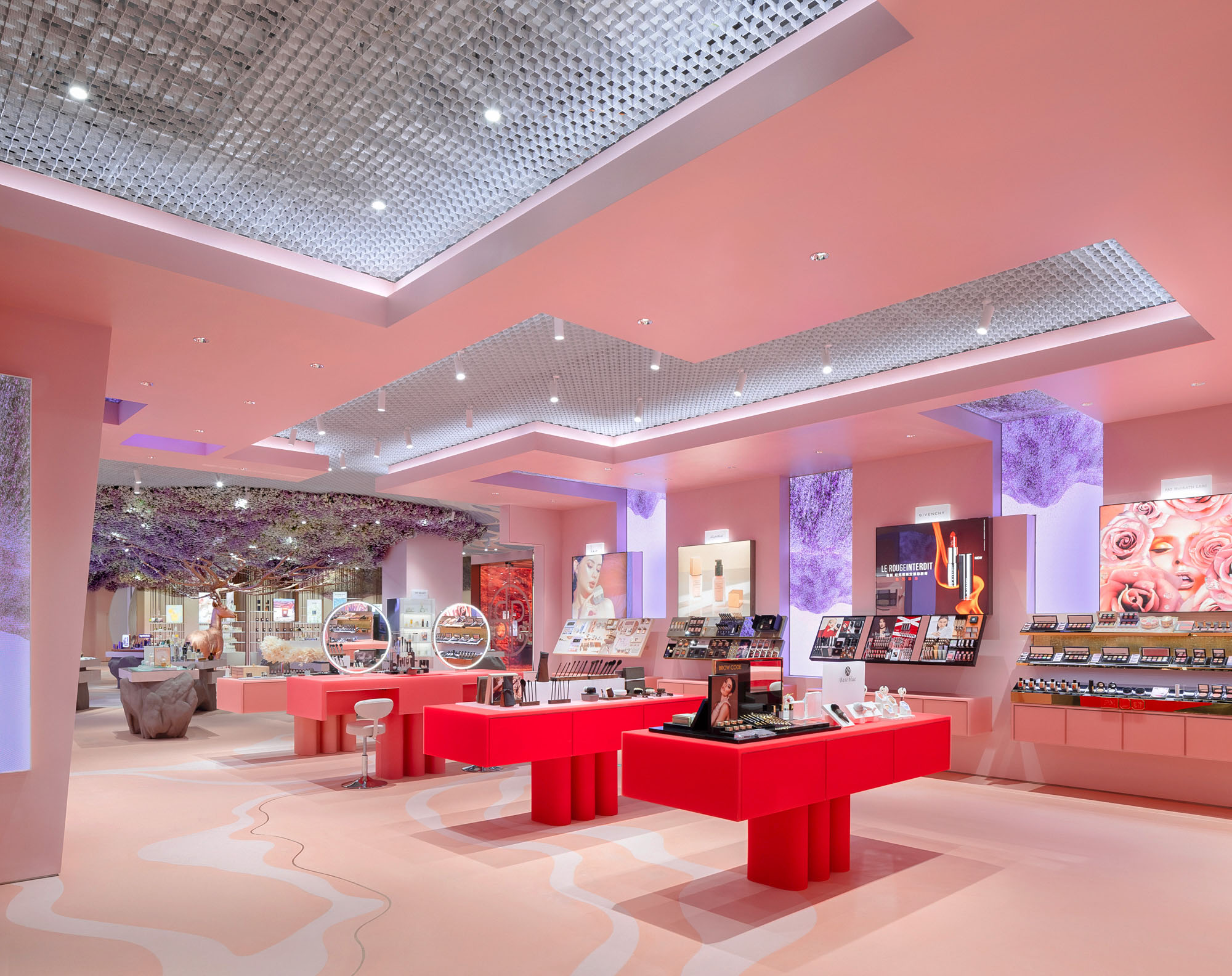
Conversely, physical projects inherit the speed of our image pipeline: a client reviewing a store design sees it under morning, dusk and retail lighting in the same meeting, because the model is already a render-ready scene.
What that means for a client
A brand building a store gets campaign-grade visuals from the people who designed the store. A brand booking a CGI campaign gets imagery art-directed by people who know how the real thing would be built. One conversation, one concept, both media.
More about the studio's approach on our about page, or browse the retail & interior design practice.
We think this is simply what a creative studio looks like after the wall between "digital" and "physical" design dissolves. The projects in this journal — dinners, windows, campaigns, stores — are all the same act of world-building, shipped in different materials.
This is also a staffing argument. Because one team carries a project from concept film to built room, nothing is lost between agencies: no reinterpreted renders, no value-engineered surprises, no handover where the idea quietly dies. The person who imagined the dune is the person who details its edge.